Monofloral honey · Southern Chile
Organic Ulmo honey from Chile
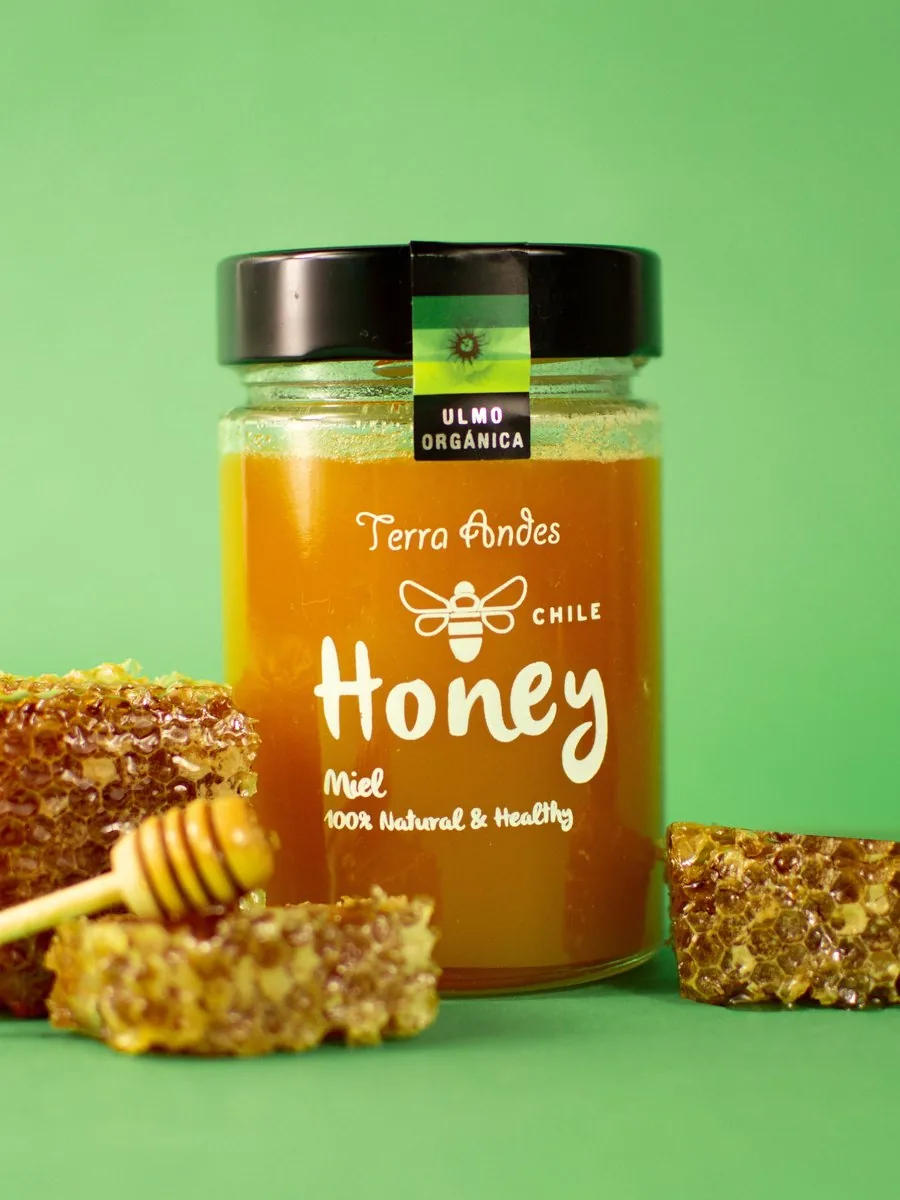
The signature honey of southern Chile’s temperate rainforests: floral, creamy and intense. It comes from the blossom of the Ulmo tree, which grows only in Chile, and every batch is selected and certified organic for retail and wholesale buyers.
What is Ulmo honey?
A honey found only in Chile
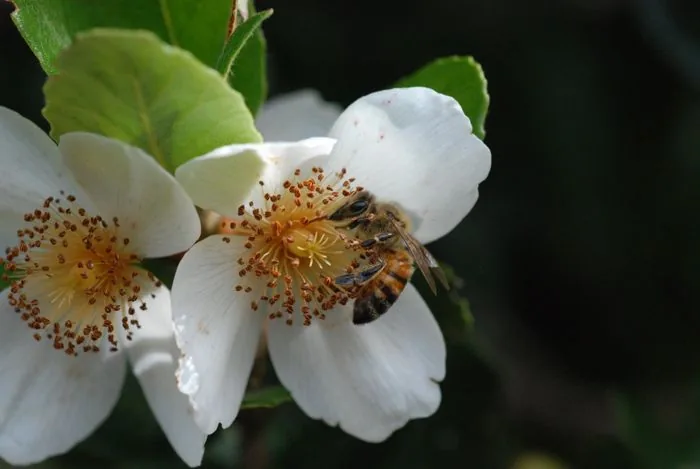
Ulmo honey is a monofloral bee honey made mainly from the nectar of the Ulmo tree (Eucryphia cordifolia), a species native to the temperate rainforests of southern Chile that bursts into large clusters of white blossoms at the end of summer.
It is 100% bee honey. What makes it special is its floral source: while wildflower honey blends the nectar of many plants, Ulmo honey captures the character of a single native species. That is why its aroma, color and texture are recognizable from the very first taste.
Our Ulmo honey comes from hives placed near native forests in the Los Lagos Region and Chiloé Island, tended by beekeeping families we have worked with directly for years. Every batch is lab-tested and packed raw, never pasteurized, to preserve its natural profile.
Flavor, aroma and color
Floral, creamy and intense
Bold but never cloying: it fills the palate with white blossoms and leaves a fresh finish, like the damp forest it comes from.
Aroma
Pronounced floral notes with an expressive freshness that recalls southern Chile’s rainforests.
Flavor
Intense sweetness that never overwhelms the palate. A clean, lingering finish.
Color & texture
Light amber (45–65 mm on the Pfund scale). It turns ivory and wonderfully creamy as it crystallizes.
How to enjoy it
- Spread on sourdough or toast for breakfast.
- With aged and goat cheeses on charcuterie boards.
- Over yogurt, granola and nuts.
- To sweeten tea and herbal infusions without masking them.
- In dressings, glazes and fine pastry.
Why does it turn creamy?
Crystallization is a sign of pure, raw honey: natural sugars slowly form fine crystals over time and in cooler temperatures. Ulmo honey crystallizes evenly into a smooth, ivory-colored cream. If you prefer it runny, warm the jar gently in a water bath, below 40 °C (104 °F).
Properties
One of South America’s most studied honeys
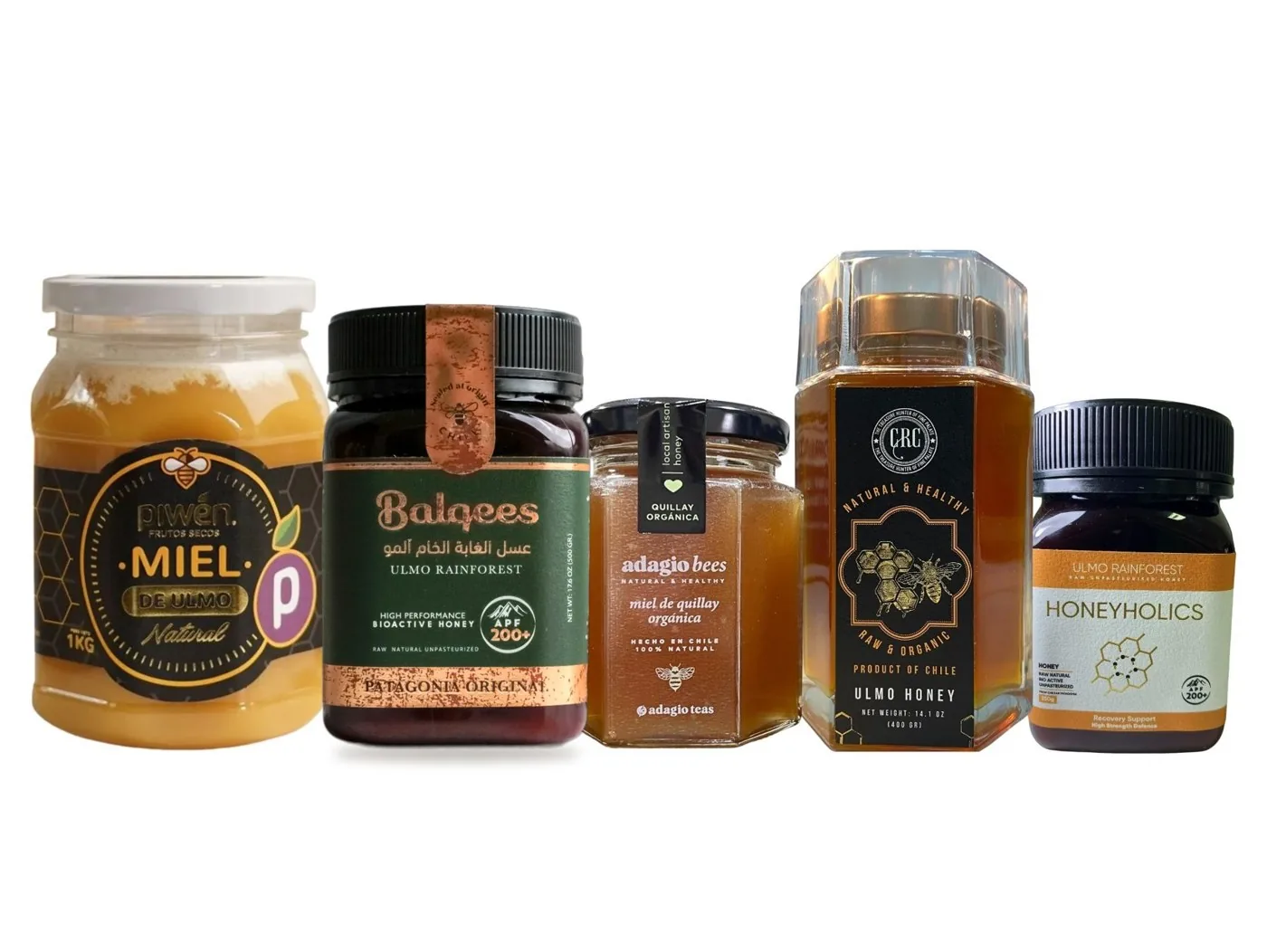
Ulmo honey has drawn the attention of universities in Chile and abroad for its antibacterial activity and antioxidant compounds, and it is often compared to New Zealand’s Manuka honey.
Like all honey, it is also a natural source of fast-absorbing energy and a natural alternative to refined sugar.
Comparison
Ulmo, wildflower and Manuka honey: what’s the difference?
All three are bee honey. What changes is the floral source, and with it the flavor, the color and the best way to use each one.
| Ulmo honey | Wildflower honey | Manuka honey | |
|---|---|---|---|
| Floral source | Mainly the Ulmo tree, native to southern Chile | Nectar from many local flowers | Manuka shrub, New Zealand and Australia |
| Flavor | Floral, intense, fresh finish | Mild, varies by season | Herbal, earthy, slightly bitter |
| Color | Light amber, ivory when crystallized | Golden to amber | Dark amber |
| Texture | Creamy when crystallized | Liquid or crystallized | Thick |
| Best for | Breakfast, cheese, tea and gourmet retail | Everyday use, cooking and food service | Functional use |
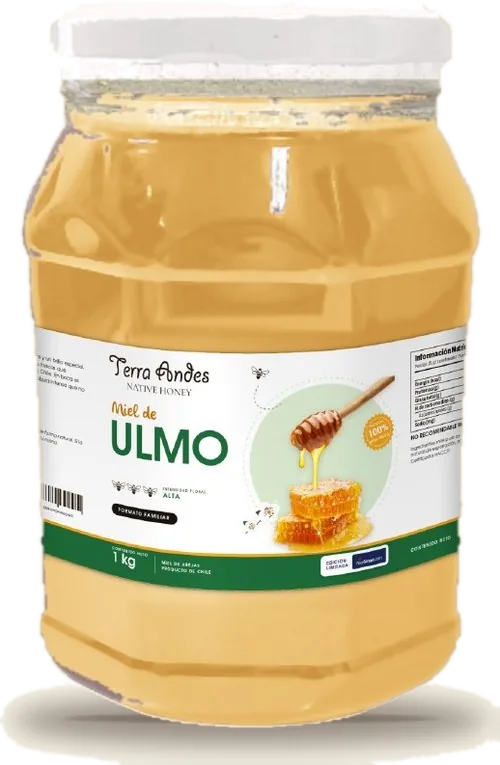
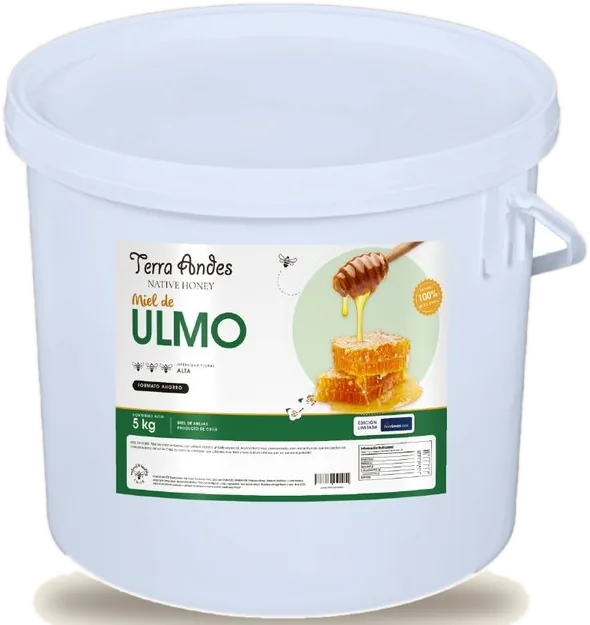
| Terra Andes formats | Organic 45, 240 and 400 g · Luxury · Family · Pails | Family 500 g and 1 kg · 5 and 25 kg pails | — |
Also from our family
Terra Andes Plus: Ulmo honey with certified activity
Our medicinal line of honeys with certified antibacterial activity (APF), developed with Pontificia Universidad Católica de Chile.
Wholesale Ulmo honey
Ulmo honey for your business, in the format you need
We supply supermarkets, specialty stores, cafés, hotels, bakeries and food manufacturers in Chile and abroad. Sold by the case, with a quote tailored to your volume.
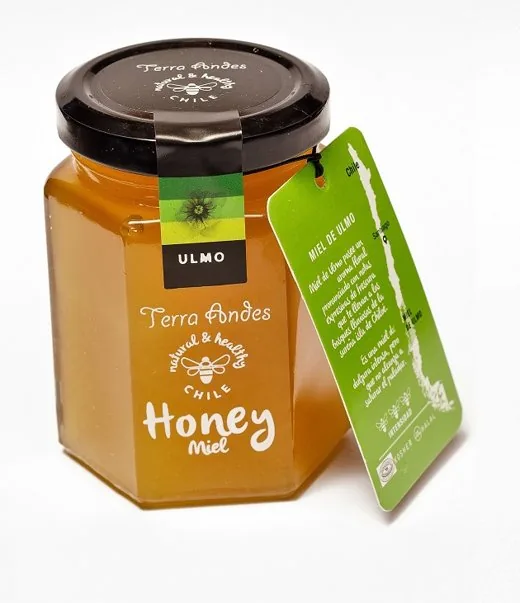
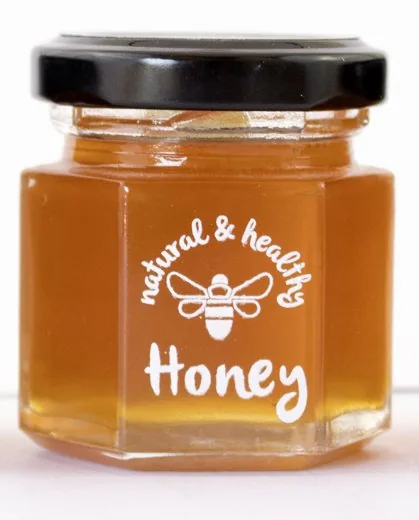
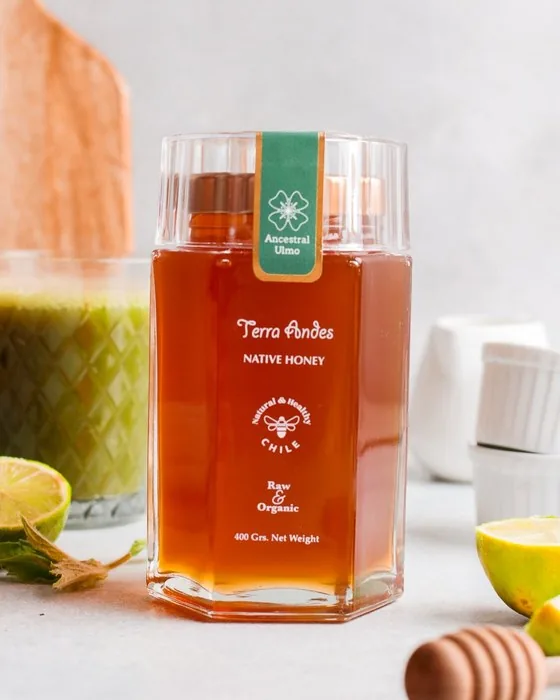
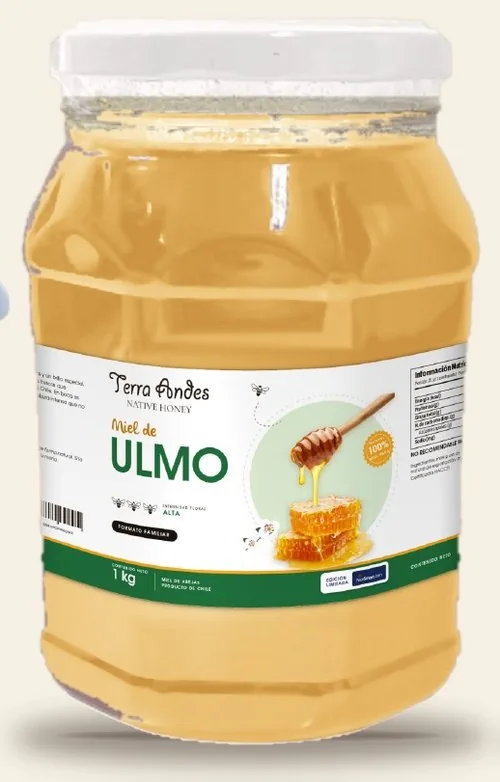
Quality & food safety
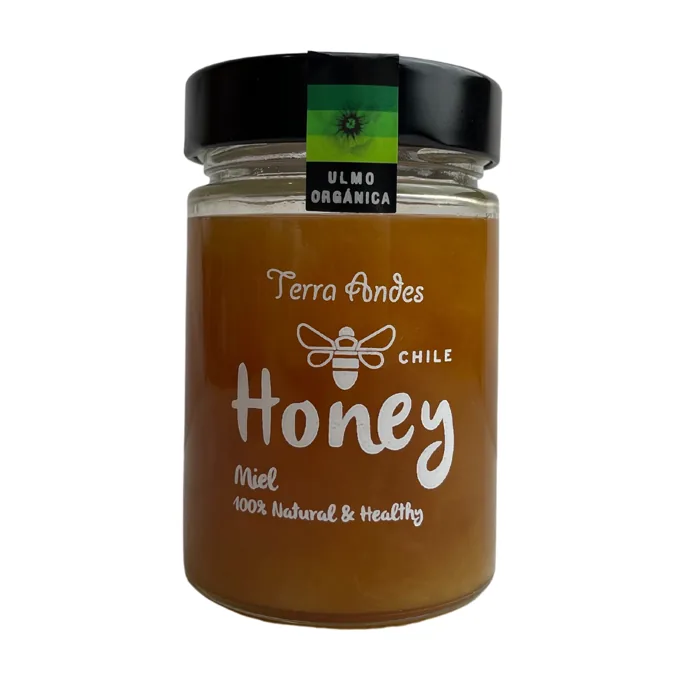
Our Ulmo honey spec sheet
Every batch is tested by accredited national and international laboratories before it is packed at our facility. Full traceability from hive to your warehouse.
 USDA Organic
 EU Organic
 Kosher
 HACCP
 True Source
| Parameter | Terra Andes Ulmo honey |
|---|---|
| Color (Pfund scale) | 45–65 mm · light amber |
| Moisture | 15–19% max. |
| HMF (freshness) | < 40 ppm |
| Fructose / glucose | 36–50% / 28–36% |
| Pasteurization | Raw, never pasteurized |
| Gluten · GMO | Gluten free · GMO free |
| Pesticides | Not detected |
| Antibiotic residues | Not detected (chloramphenicol, nitrofurans, sulfonamides, tetracyclines and more) |
FAQ